this set of functions generates random bytes or numbers from OpenSSL. This
provides a cryptographically secure alternative to R's default random number generator.
rand_bytes generates n random cryptographically secure bytes
References
OpenSSL manual: https://docs.openssl.org/1.1.1/man3/RAND_bytes/
Examples
rnd <- rand_bytes(10)
as.numeric(rnd)
#> [1] 144 255 26 87 62 0 101 49 212 42
as.character(rnd)
#> [1] "90" "ff" "1a" "57" "3e" "00" "65" "31" "d4" "2a"
as.logical(rawToBits(rnd))
#> [1] FALSE FALSE FALSE FALSE TRUE FALSE FALSE TRUE TRUE TRUE TRUE TRUE
#> [13] TRUE TRUE TRUE TRUE FALSE TRUE FALSE TRUE TRUE FALSE FALSE FALSE
#> [25] TRUE TRUE TRUE FALSE TRUE FALSE TRUE FALSE FALSE TRUE TRUE TRUE
#> [37] TRUE TRUE FALSE FALSE FALSE FALSE FALSE FALSE FALSE FALSE FALSE FALSE
#> [49] TRUE FALSE TRUE FALSE FALSE TRUE TRUE FALSE TRUE FALSE FALSE FALSE
#> [61] TRUE TRUE FALSE FALSE FALSE FALSE TRUE FALSE TRUE FALSE TRUE TRUE
#> [73] FALSE TRUE FALSE TRUE FALSE TRUE FALSE FALSE
# bytes range from 0 to 255
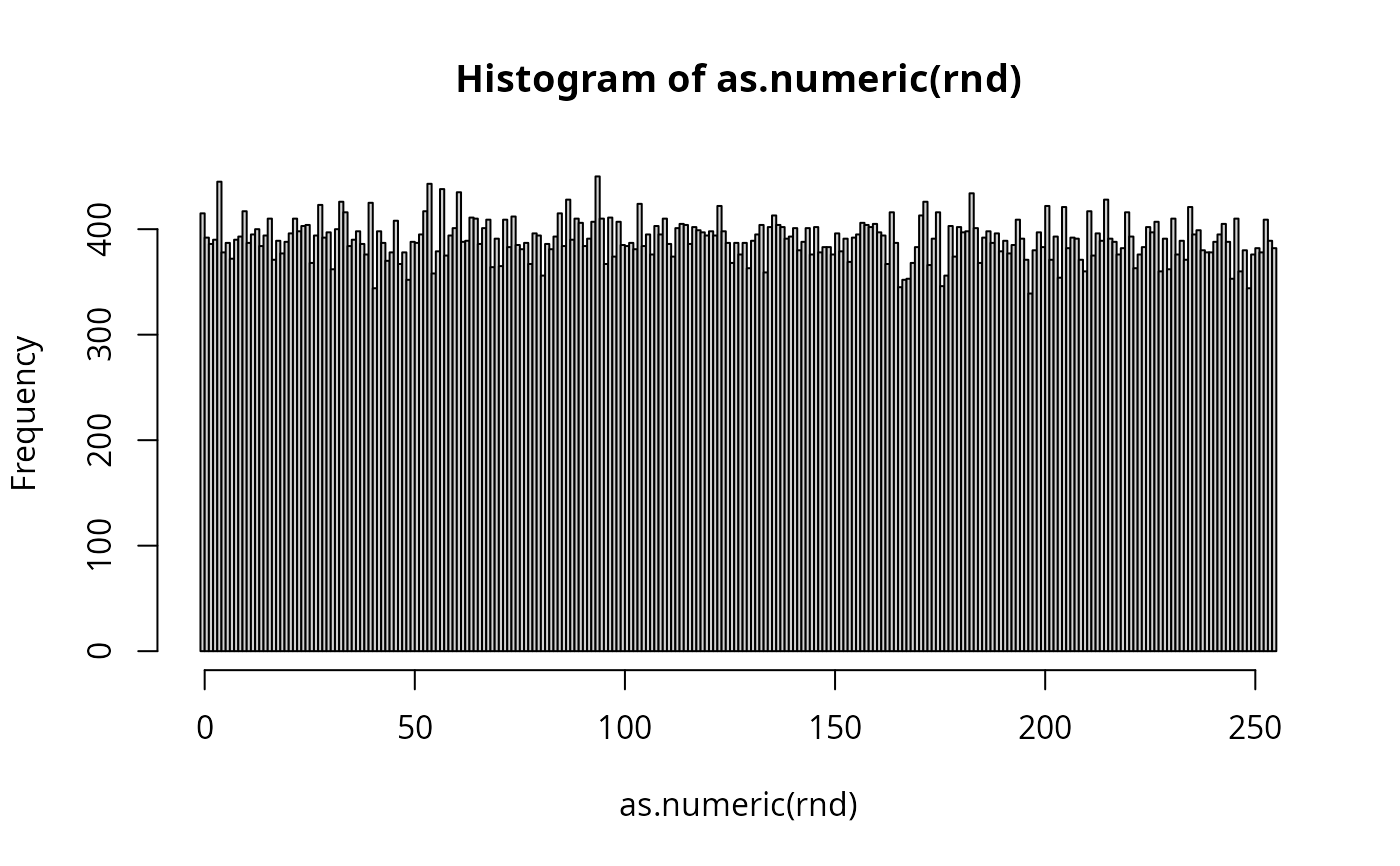
rnd <- rand_bytes(100000)
hist(as.numeric(rnd), breaks=-1:255)
 # Generate random doubles between 0 and 1
rand_num(5)
#> [1] 0.6849617 0.3580196 0.3178384 0.4104250 0.4630580
# Use CDF to map [0,1] into random draws from a distribution
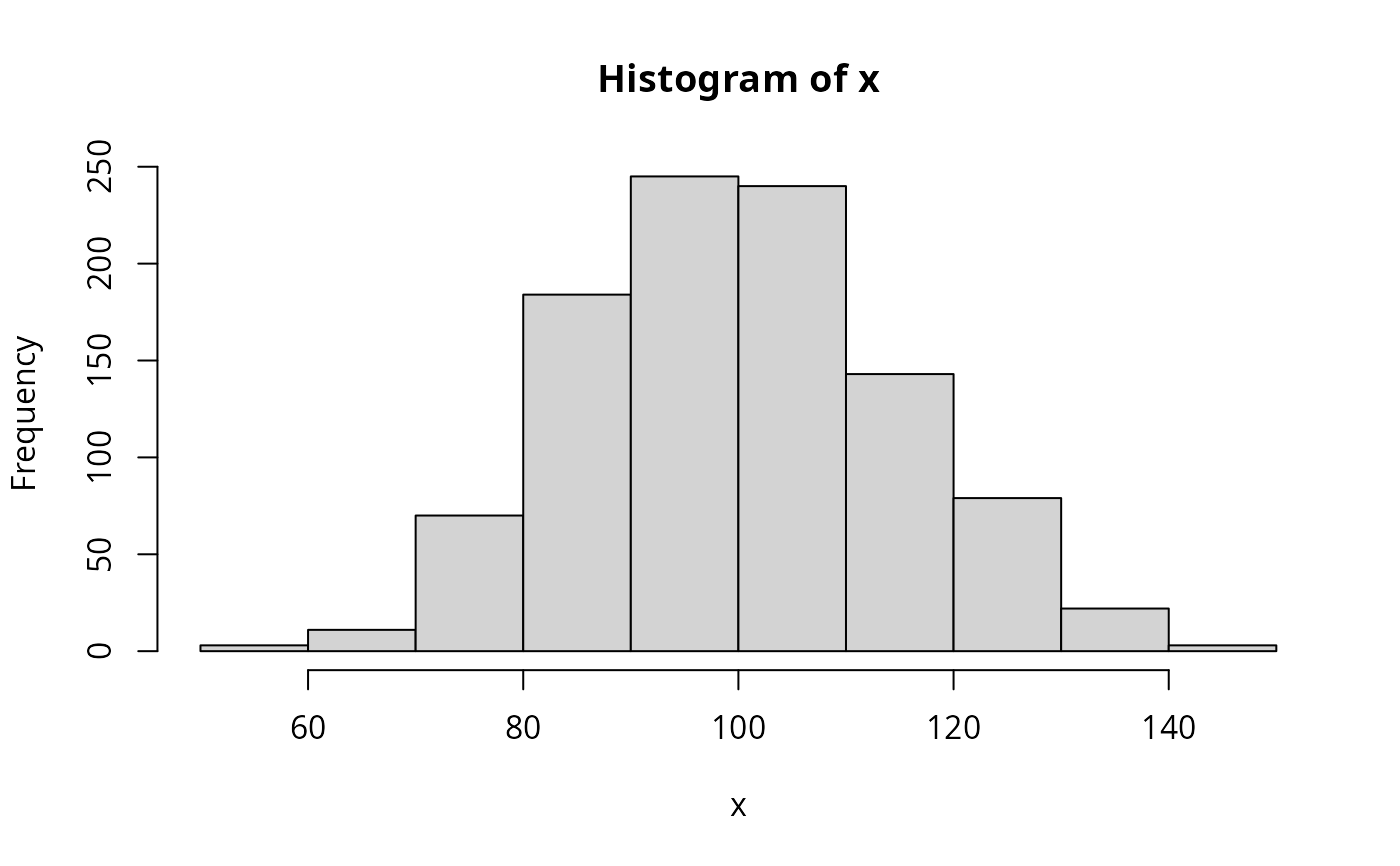
x <- qnorm(rand_num(1000), mean=100, sd=15)
hist(x)
# Generate random doubles between 0 and 1
rand_num(5)
#> [1] 0.6849617 0.3580196 0.3178384 0.4104250 0.4630580
# Use CDF to map [0,1] into random draws from a distribution
x <- qnorm(rand_num(1000), mean=100, sd=15)
hist(x)
 y <- qbinom(rand_num(1000), size=10, prob=0.3)
hist(y)
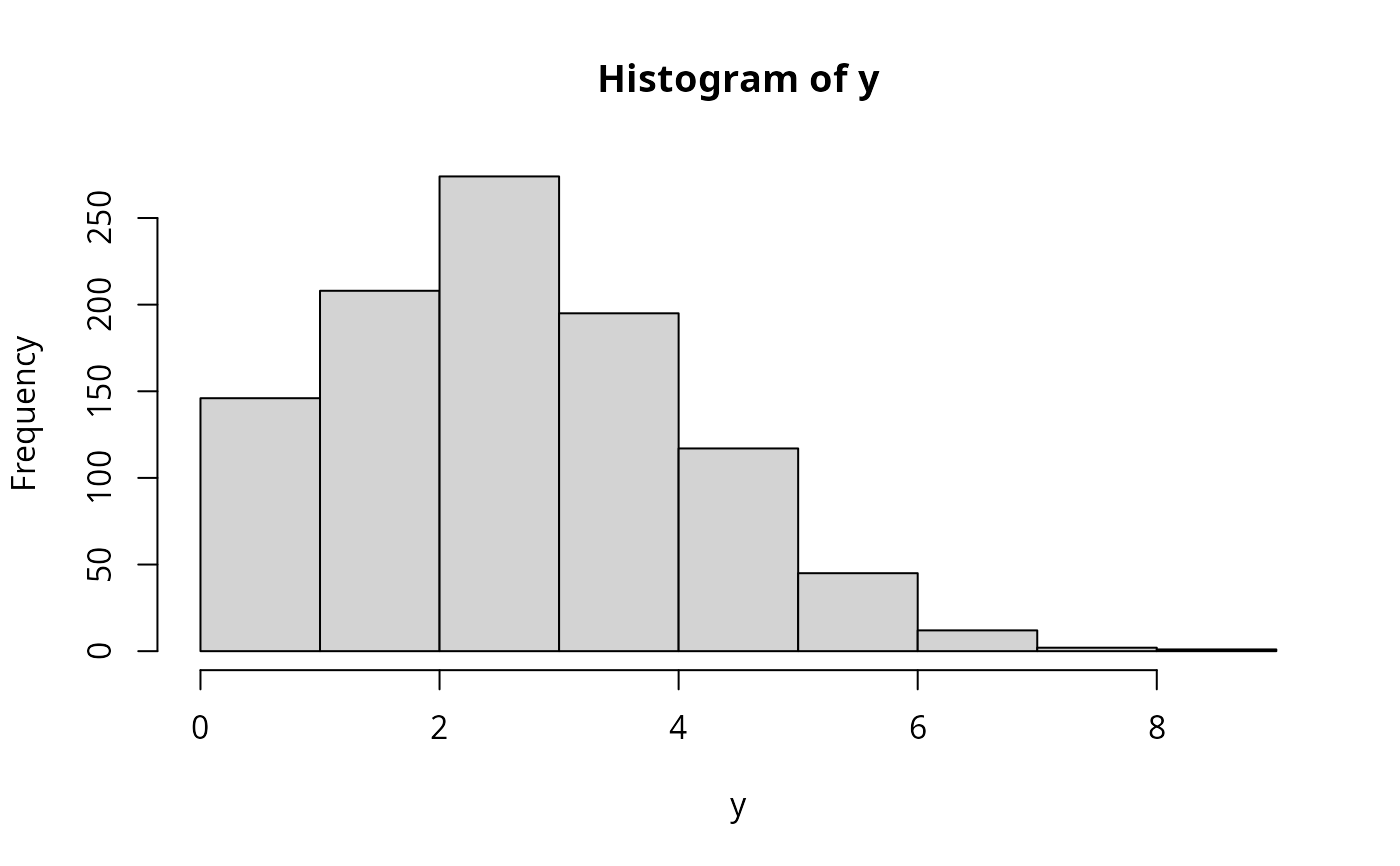
y <- qbinom(rand_num(1000), size=10, prob=0.3)
hist(y)