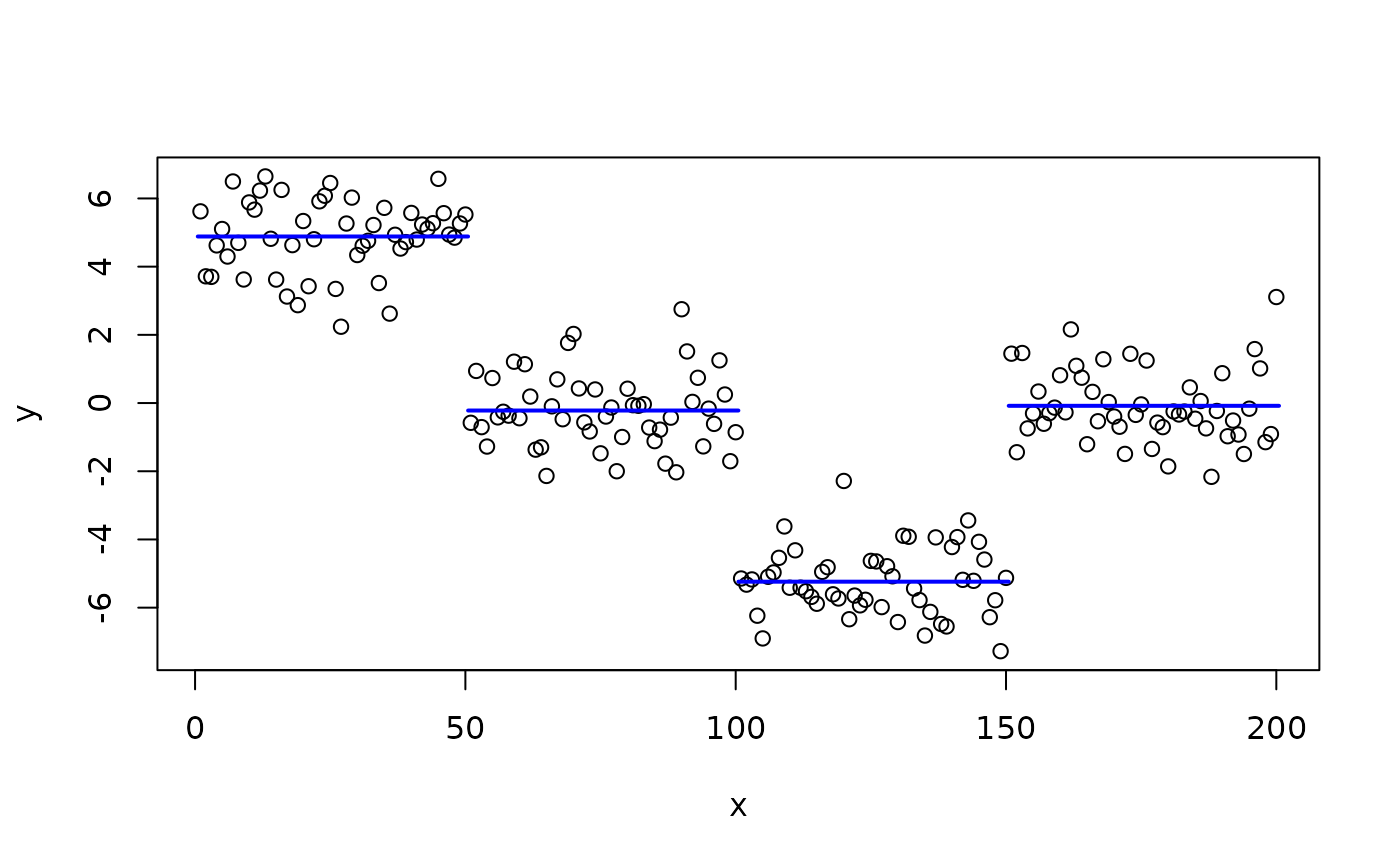
Computes the sample means in non-overlapping bins
binMeans(y, x, idxs = NULL, bx, na.rm = TRUE, count = TRUE,
  right = FALSE, ...)
Arguments
- y
A
numericorlogicalvectorof K values to calculate means on.- x
- idxs
A
vectorindicating subset of elements to operate over. IfNULL, no subsetting is done.- bx
A
numericvectorof B + 1 ordered positions specifying the B > 0 bins[bx[1], bx[2]),[bx[2], bx[3]), ...,[bx[B], bx[B + 1]).- na.rm
If
TRUE, missing values inyare dropped before calculating the mean, otherwise not.- count
If
TRUE, the number of data points in each bins is returned as attributecount, which is anintegervectorof length B.- right
If
TRUE, the bins are right-closed (left open), otherwise left-closed (right open).- ...
Not used.
Details
binMeans(x, bx, right = TRUE) gives equivalent results as
rev(binMeans(-x, bx = sort(-bx), right = FALSE)), but is faster.
Missing and non-finite values
Data points where either of y and x is missing are dropped
(and therefore are also not counted). Non-finite values in y are
not allowed and gives an error. Missing values in bx are not allowed
and gives an error.
References
[1] R-devel thread Fastest non-overlapping binning mean
function out there? on Oct 3, 2012